When Should You Scarify Your Lawn?
If your lawn is looking tired, mossy, thin or generally a bit worse for wear, you’ve probably come across the word scarification.
It’s one of those lawn care terms that sounds far more complicated (and scarier) than it actually is.
Scarification is the process of removing the layer of dead grass, moss, and other organic material that accumulates between the living grass and the soil. Done properly, it can give your lawn the opportunity to breathe, grow and recover.
But you can’t just scarify a lawn whenever you feel like it.
Timing matters. So do the condition of the lawn, how aggressively you scarify it, and what you do afterwards.
I’ve spent time maintaining professional football pitches and golf courses, and one of the biggest lessons from working in sports turf is that you don’t just do something because you’ve got the equipment to do it.
You need to understand what the turf actually needs.
So when should you scarify your lawn?
What is lawn scarification?
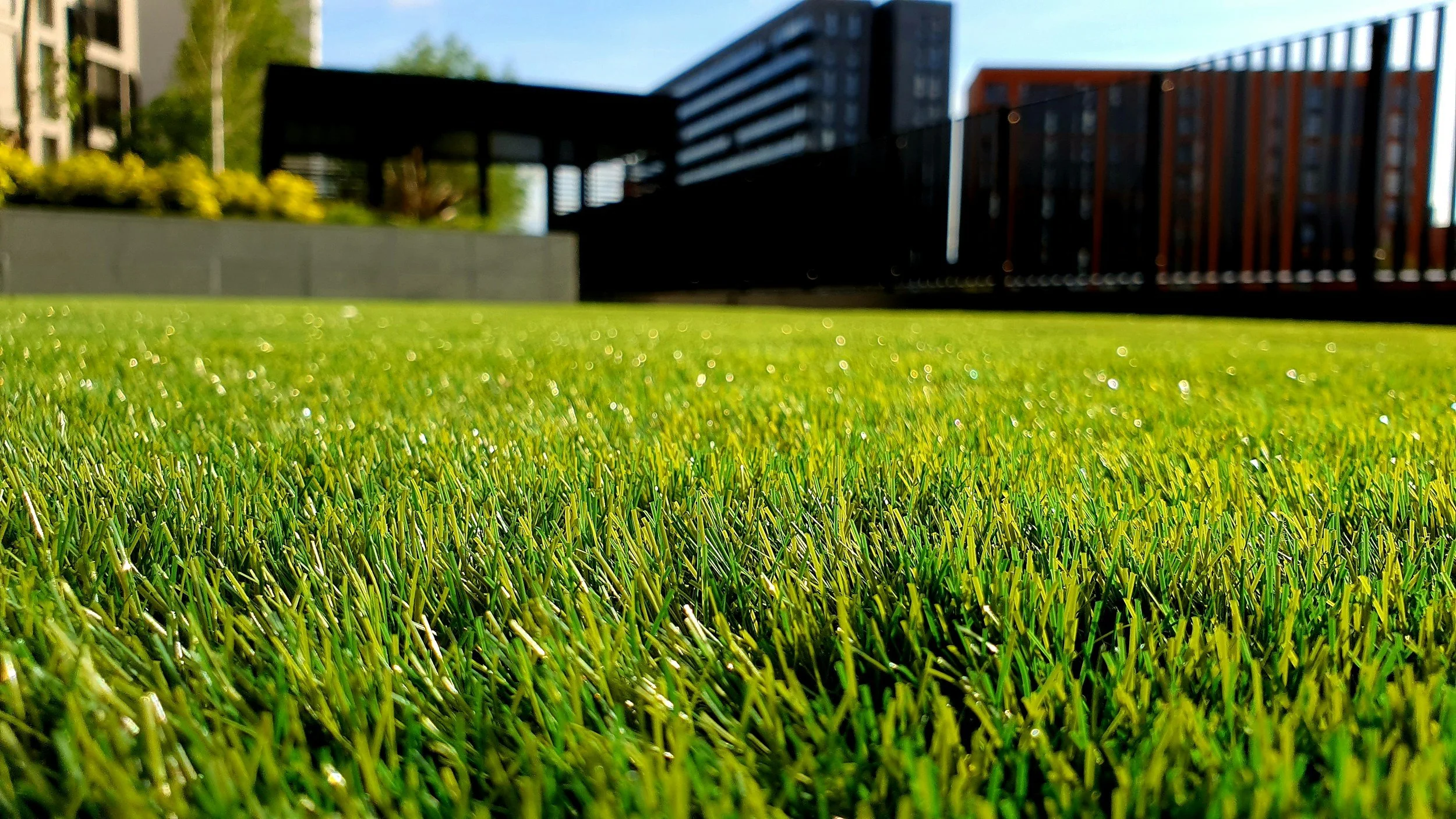
Scarification is the mechanical removal of thatch, moss and other unwanted organic material from the surface of your lawn.
A small amount of thatch is normal and isn’t necessarily a problem. The issue comes when too much builds up.
A thick layer can prevent water, air and nutrients from reaching the soil and grass roots properly. It can also create an environment where moss thrives and healthy grass struggles to compete.
Scarification removes some of this material, opening up the surface of the lawn.
The result isn’t immediately pretty. In fact, you lawn can look significantly worse immediately after scarification.
Don’t worry. You haven’t messed it up. That’s normal.
You’re deliberately removing material from the lawn so that healthier grass can grow in its place. Think of it as renovation rather than a cosmetic tidy-up.
When is the best time to scarify a lawn in the UK?
If you live in Hampshire, the two main windows for scarification are spring and early autumn.
The important thing isn’t simply the month on the calendar, though. You want the grass to be actively growing and the conditions to be suitable for recovery.
Spring lawn scarification

Spring can be a good time to scarify a lawn that has accumulated moss and thatch over winter. As temperatures rise and the grass begins growing again, removing excess material can give the lawn more room to recover.
The downside is that spring weather can be unpredictable. If the lawn is still cold, wet, and struggling to grow, aggressive scarification can do more harm than good.
Autumn lawn scarification
For many lawns, early autumn is an excellent time for scarification.
The summer has usually put the lawn through plenty of stress. Heat, drought, mowing and foot traffic can all leave their mark.
By autumn, conditions are often becoming more favourable for grass growth again.
Scarifying at the right time can remove accumulated thatch and moss, open up the lawn and create better conditions for overseeding. Your lawn then has time to recover before winter arrives.
For lawns in Hampshire, this makes early autumn a particularly useful period for renovation work.
But again, don’t treat any season as a magic date. If your lawn isn’t growing or conditions are poor (as they often are in the UK), waiting is the better decision.
Does your lawn actually need scarifying?
Scarification is useful, but that doesn’t mean every lawn needs it.
If you search online, you’ll find plenty of lawn care advice telling you that moss means scarification, or that every lawn should be scarified every autumn. But sometimes it’s just not necessary.
The condition of your lawn should determine what you do to it.
Some signs that your lawn may benefit from scarification include:
A thick layer of moss
A spongy feeling underfoot
Visible thatch between grass blades
Grass struggling to grow despite otherwise good conditions
Large amounts of dead material sitting within the turf
Water struggling to penetrate the surface
A lawn that has become increasingly thin or weak
If you’re seeing some of these problems, scarification could be part of the solution. But it isn’t the whole solution.
A lawn can be thin because of poor nutrition. It can be patchy because of wear. It can be struggling because of compaction. It can be full of moss because the conditions favour moss over grass.
The job is to work out why the lawn looks the way it does before deciding what to do about it.
What happens after scarification?
This is probably the biggest thing you should know before having your lawn scarified.
It will probably look worse before it looks better.
Scarification can leave a lawn looking thin, bare and generally quite brutal immediately afterwards.
That's because you're removing the material that's causing the problem.
The aim isn't to make the lawn look better that afternoon. The aim is to create better conditions for healthy grass to grow afterwards.
This is why scarification is often followed by overseeding.
Removing the unwanted material opens up the surface. Introducing new grass seed then allows those areas to establish new, healthy growth.
With the right conditions and aftercare, the lawn can begin to recover and develop better density.
So don't judge a scarification job by what the lawn looks like when the machine has finished.
Judge it by what it looks like several weeks later.
Can I scarify my lawn myself?
Yes.
You don't need to be a professional groundsman to scarify a lawn.
There are scarifiers available to hire or buy, and for a small garden it's entirely possible to do the job yourself.
The difficult part isn't operating the machine.
It's knowing how aggressively to use it.
Go too lightly and you may not remove enough material to make a meaningful difference.
Go too aggressively and you can remove a significant amount of healthy grass along with the unwanted material, leaving the lawn with a much bigger recovery job.
This is one of the differences between lawn care and simply doing a garden job.
The machine is the easy bit.
Knowing whether the lawn needs the treatment, when to do it and how aggressively to approach it is where the judgement comes in.
When should you NOT scarify your lawn?
There are situations where scarification isn't the answer.
Avoid aggressive scarification when the lawn is:
Waterlogged
Extremely dry or stressed
Not actively growing
Newly established
Already severely damaged
Likely to struggle to recover from the work
The weather matters too.
You want the grass to have the conditions it needs to recover after the disruption.
This is why professional lawn care isn't simply about having a list of jobs that need doing every year.
Good lawn care is knowing when not to do something.
How long does a lawn take to recover after scarification?
There's no single answer.
Recovery depends on the condition of the lawn, how aggressively it was scarified, the time of year, moisture, temperature, grass species and what happens afterwards.
A healthy lawn scarified under good conditions can recover relatively quickly.
A weak lawn scarified aggressively at the wrong time can take much longer.
This is also why I'd be wary of anyone promising a specific result in a specific number of days.
Turf is biological.
You can create the right conditions for growth, but you can't force the grass to grow on your schedule.
Professional lawn scarification in Hampshire
If your lawn looks tired, mossy, or thin and you're not sure what it needs, Hanscombe Lawn Care provides professional lawn scarification and overseeding across Havant, Waterlooville, Clanfield, and the surrounding areas.
I'll assess your lawn's condition and recommend the best approach.
Want to get your lawn back to its best? Get in touch for a quote.